As we navigate the halls of our schools – whether those are the traditional ones or the virtual ones, a question emerges that challenges the core of our educational journey: Are we here to discover the unknown or to reinforce what we already believe?
As I read news stories from around North America recently, I have been thinking about this more. Of course in some ways the answer to the questions is yes – it is both of these things. As some groups of people become more polarized with what they believe, it does seem that more parents are resistant to their children being exposed to a diversity of ideas. And some of various political views want to narrow the ideas young people connect with.
Schools have long been celebrated as bastions of knowledge and innovation, places where curiosity meets opportunity. Yet, there’s an underlying tension that merits exploration. Do our educational experiences serve to expand our horizons, or are they subtly designed to validate our pre-existing notions?
In classrooms everywhere, the pursuit of knowledge is often depicted as a linear path towards understanding. However, true learning requires not just the absorption of information, but the ability to question and challenge the status quo. It involves exposing students to diverse perspectives and, perhaps more importantly, teaching them to think critically about their own beliefs. I think of this in the context of protests right now – across the political spectrum on a variety of issues connected to schools. Part of the power of schools and learning is this tension – to be able to challenge ideas.
The beauty of education lies in its potential to transform. By encouraging students to venture beyond their intellectual comfort zones, we equip them with the tools to engage with the world in meaningful ways. Schools must strive to be more than just echo chambers of familiarity; they should be arenas of robust debate and discovery.
As we ponder the purpose of our educational systems, let’s advocate for a model that embraces the unfamiliar and the uncomfortable. Let’s prepare our learners not just to succeed in the world as it is, but to have the courage to question and reshape it. In the world of AI, where a few clicks can generate a thesis, let’s continue to push our students to think. And as teachers let’s be sure we are also doing our part to not limit our classrooms to the ideas we have or hold, but model the openness to ideas we want with our students.
The goal? A generation of thinkers who are as adept at questioning assumptions as they are at confirming truths. Because perhaps the most profound learning occurs not when we confirm what we already know, but when we dare to explore what we don’t.
As I have noted with previous posts, this post was supported through the use of generative AI and prompting through Chat GPT 4.0.
When you are known for technology and innovation, you experience this ongoing mix of excitement and adrenalin at some points of the year and anxiety and worry at other points.
The question I get asked most is – “So, what’s next?” I usually just want to snap back, “Come on, can we just do what we are doing for a minute before thinking about what’s next.” But that is not our world, and if we want schools and learning to continue to be relevant for all learners we need to push the boundaries of what we are doing.
With that as an intro, I want to share today what I see as three of the next big moves for our schools. I am not ready to make any announcements today, but when people ask “just what do those people at the Board Office do?” – the answer as one of “those people” is: I am working on these three strategic initiatives.
Fully Virtual Reality Classrooms. There is lots in the news about the space crunch in schools. School construction is not keeping up with population growth and school districts are looking at a variety of new schedules to accommodate all the learners. We are looking to do something a bit different. We are considering having half of all high school classes occur in a virtual reality environment. This means you would spend half the time in a physical class, with the other half students will be wearing their VR glasses and haptic feedback suits and won’t need to physically present in the school building. Art classes will occur in the great galleries of our world, biology classes will be under the sea and history classes will take place throughout Asia and Europe. We will need half as many classrooms and schools with this new model.
Anti-Gravity Physical Education Programs. Obviously health and wellness is top of mind for students and families. We have worked hard to lead the physical literacy work in British Columbia and across Canada. And this year the Feeding Futures Program had helped solidify the work. There is a lot of research on the advantage of doing athletic activity in an anti-gravity environment. We would look to convert one of the gyms in each high school to an anti-gravity chamber, allowing students to experience sports like basketball and volleyball without the constraints of gravity. If the research is true, this will see tremendous gains for our students in balance and spatial awareness among other key development skills.
Time Travel Field Trips. I am most excited about this option. I know, this sounds like some crazy science fiction, but for those who have been following along with the developments in artificial intelligence, you know this is likely going to be possible in the next several years, and we want to be at the front edge of this in West Vancouver. We are partnering with Loof Lipra Technologies out of Sweden. The idea would be that students could travel to different historical periods using cutting edge time travel technologies. In addition to the traveling back in time we are also working with our Robotics teachers on travel to the future. Our students will be able to learn about careers that don’t even exist now! While not quite ready for testing yet, we would see our students currently in elementary school being able to have these kinds of experiences before they graduate grade 12. The opportunity for our students to not just read or watch history but be part of history is something that is tremendously exciting. And experiencing the future first-hand could inspire students to explore new opportunities and industries.
I do like to use this space to be transparent with the thinking of what is coming next. While some might worry that others will steal their ideas, I think it is important to share key directions. And especially at this time of year I have tried to make it a habit. We know once we move to VR Learning, Anti-Gravity classrooms and time traveling field trips other will follow. Sometimes you have to be first – and that is the blessing and the curse of being us.
To catch you up on some of the other innovations I have shared in recent years, here is a list:
And just last year in 2023 we embraced our expanded mandate with our Animal Kingdom Academy.
Happy April Fools’ Day, everyone! While this might not all really be in the strategic plan yet, it is fun to think about what might be. Here’s to a future where education knows no bounds, and where we’ll keep dreaming big and embracing the endless possibilities that lie ahead.
This blog post was assisted by Chat GPT. The ideas were refined through a series of prompts with Chat GPT 4.0 and the image accompanying the blog was generated by pasting the post into Chat GPT 4.0 and asking for suggested images. In an effort to be transparent with my own learning with generative AI, I will include a reference at the end of any posts that I used AI assistance.
I have written before (HERE) about the importance of not just moving more, but developing physical literacy skills with students. This was pre-pandemic. And if anything the limited activity many had during the COVID-19 pandemic increased these challenges leading to what many are seeing as a health crisis.
In the world of education, we rightly emphasize intellectual growth, but the significance of physical health cannot be overstated. We are intentionally trying to do this differently in West Vancouver Schools. We are looking at the whole school environment to get students moving more often throughout the day. For us physical health is not just about sports or fitness; it’s a comprehensive approach encompassing mental and emotional well-being, community involvement, and personal development.
During the pandemic new connections and partnerships were formed between health and education. And for us, this is translating into our work in physical literacy – it is not just about the “school’s job” to make changes, but it is also for the entire community to work together. Community partnerships can push us forward, positively impacting students’ overall health and wellbeing. This new physical health promotion video which is a product of our collective efforts in West Vancouver, shares our thinking:
The video showcases the importance of finding creative ways to promote physical activity and make movement matter. Engaging students in a variety of activities, from yoga and dance to outdoor adventures, while also using simple but intentional movements in classrooms and hallways, highlights the diverse ways students can engage in physical health. It’s a reminder that physical health must be accessible to everyone, regardless of their athletic ability or interests. And we know that it is important for all of our students to be competent in key physical literacy skills. Just like you have key literacy and numeracy skills to function in the world, the same is true with physical literacy. When you are competent in movement skills, it is more likely you will be immersed in diverse physical pursuits throughout your life because activities are more fun when you are physically competent. The focus is on enjoyment, participation, and the holistic benefits of staying active.
And we know the research is clear that physical literacy is linked to better academic performance and consistently embedding physical literacy in schools can have a positive impact on both physical health and academic achievement.
Physical health is a collective journey, where students support and motivate each other. This communal aspect is crucial, as it fosters a positive environment where students form new friendships, feel encouraged to try new activities in a variety of environments, and push their boundaries.
The integration of physical health promotion into our schools is a testament to its importance. It’s not just an extracurricular activity; it’s a fundamental part of student development. As the Province of BC moves to expand foods programs (through its Feeding Futures initiative) and calls are coming for a national program, this needs to be linked to the work in physical literacy – this is all interconnected.
The physical literacy work is essential for all of us. We need to continue promoting and supporting diverse physical health opportunities giving our students skills that they will value and be motivated to use for their entire life. By doing so, we’re not just nurturing healthier bodies; we’re building stronger, more connected communities.
Note: The visual at the top of today’s post was generated by me pasting this blog post into Chat GPT 4.0 and asking it to generate some options of images that could accompany the post.
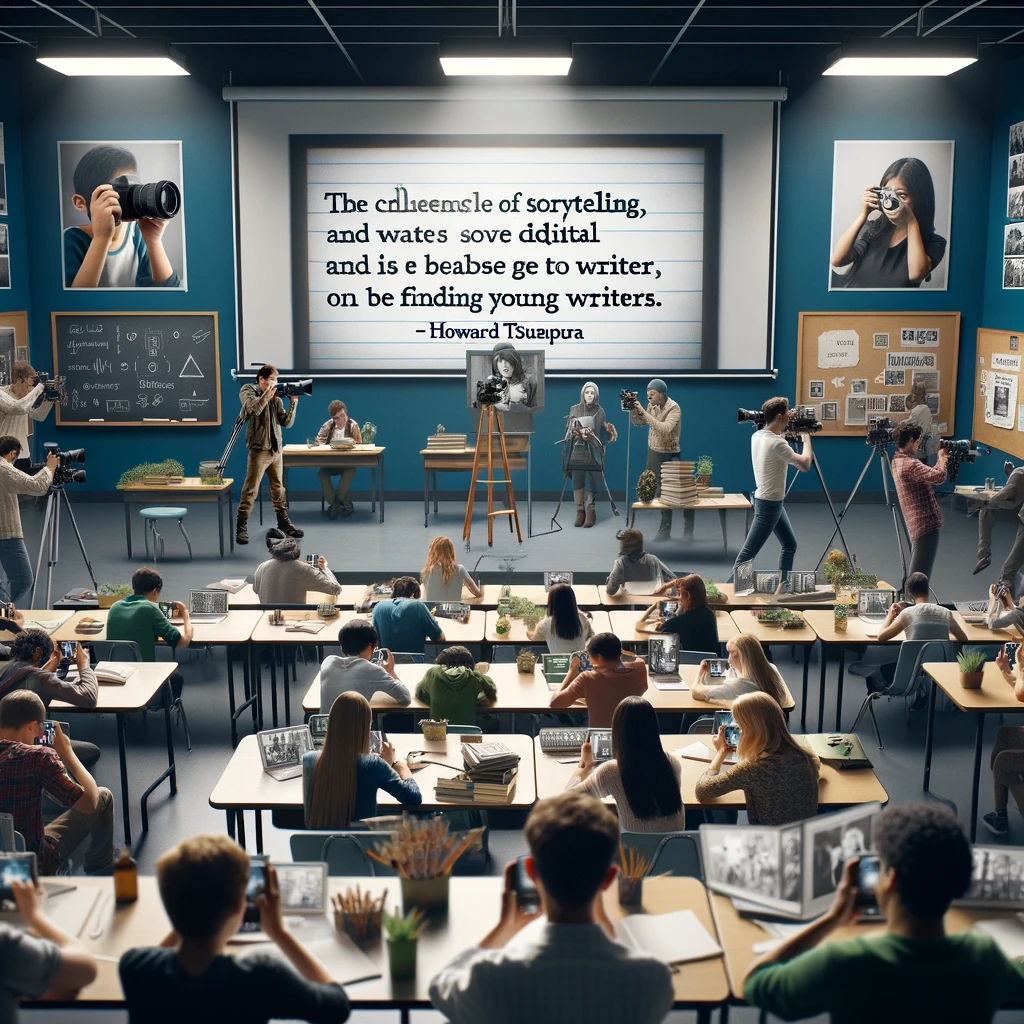
I have been thinking about writing this week. The generative AI discussion is really making people think about what writing might look like in the future. It was less this though, and actually a quote from one of my favourite local writers in the media, that struck a chord with me. Howard Tsumura, who I have written about here before, and I have known and read for more than 30 years had this interesting quote when writing about the challenge of finding new writers to fill his shoes, “there is no issue finding young people who can take photos, shoot video or help broadcast . . .but finding writers even close to the standard of deadline writing with flair is nearly impossible.”
And I will put my biases out there, as someone who still subscribes to several hard copy newspapers, and finds joy in this act of blogging, I am on “team writing.”
In our digital age, where visual content reigns supreme, it’s no surprise that we find an abundance of talented young individuals adept at photography, videography, and broadcasting. I am so impressed by them in our schools. Their ability to freeze time in a photo or bring an event to life on screen is nothing short of remarkable. These skills are invaluable, and the ease with which students pick up cameras or manage live streams is a testament to their adaptability and tech-savviness. I have great admiration for them. I wish I could do more of what they do. I wish that the posts you read here had more photos and videos to help tell stories and bring my words to life.
However, there’s a different kind of magic in written words – a magic that seems to be fading in the backdrop of high-definition images and live-action videos. The art of writing, especially under the pressure of deadlines and with a flair that captures the reader’s imagination, is a rare find among young individuals today. This is not to say we don’t have good writers, but sometimes I feel like we have fewer writing storytellers with our young people. And yes, I know this is all in a world of murkiness now with the ever growing power of generative AI. Can’t Chat GPT just do this, why do we need to do it?
Writing is not just about stringing words together; it’s about storytelling. It’s about painting a picture so vivid that readers can feel the adrenaline of the moment and it is about conveying the emotions, the passion, and the spirit of the situation in a way that resonates with those who were there and informs those who weren’t. It is something I have tried to get better at – and I have found that my most read posts here have not been my technical pieces of writing or my opinion pieces, but those times I have been able to tell a story and make you feel like you were actually in our schools or with me on a particular journey.
The challenge lies not in the lack of talent but in nurturing the interest and honing the skills required for this kind of writing. Just as we encourage young photographers to look beyond the lens and videographers to see the story in every frame, we need to inspire young writers to find their voice and use it powerfully. We can’t say we are producing good writers if we are just producing good technical writers.
In our schools we must continue to create spaces where writing is celebrated and where young writers feel empowered to explore their creativity. And even at a time when we see traditional print media being some of the worst job security out there, we need to be encouraging students to contribute to school newspapers, blogs, or social media channels. These can give them a platform to showcase their work and build their confidence. And while there may not be as many jobs in the future for using words to tell stories as there have been in the past, I am not ready to abandon its importance.
The quest for young writers who can craft stories with style and meet deadlines is not an impossible one. It’s a journey that requires patience, encouragement, and a collective effort to ignite a passion for writing in young people – in schools and our community. As we continue to marvel at the stunning photos and videos that capture the essence of our school events, let’s also strive to find and nurture the writers who can bring those moments to life in words.
Thanks Howard for the prompt this week.
On the topic of generative AI – I am going to start playing around with using AI generated imaged to accompany my posts. In the past I have largely used stock photos with some personal photos. The photo at the top of today’s post was generated by me pasting this blog post into Chat GPT 4.0 and asking it to generate some options of images that could accompany the post.
The first text came about 6:15 AM. It was from a now retired former school superintendent from a local district. It was short and to the point.
You have gotten soft. It is not even snowing anymore.
He was half-joking. But it definitely speaks to some changing expectations as earlier this month, our district, along with many others locally had two snow days.
When I started as superintendent 14 years ago. There was an unspoken code with colleagues. We don’t call snow days. Snow days are a sign of weakness. Maybe I am overstating it a bit, but I think I went seven years without calling a snow day. Now, it feels like I call at least one every year.
I have written before about snow days. I last wrote about them in January of 2020, A Social Media Snowstorm. Here is part of what I said:
Of course, the truth of it is that making snow day decisions sucks. You can be sure that half the people think you make the wrong decision. I get lots of emails about how decisions get made – and it is a bit of art and science. The goal is to keep schools open whenever possible. Snow days are a huge inconvenience, and often force parents to take unplanned time off of work, and have huge ripple effects beyond just our schools. That said, we have to be sure it is safe for our staff, who often travel from long distances to get to work, and safe for our students and families who need to walk or drive to school to be able to attend.
The timing of this post is really important. It is just a couple of months before our entire school system was thrown into flux with COVID – when opening, closing, or doing a bit of both at the same time became the norm. And now, after the COVID experience, things have changed around calling snow days. The community seems to have shifted and the “line” of the snow day has moved. Without the empirical evidence to support this claim, I feel like snow days are easier to call, and more readily accepted than they were before COVID. Here is what I think has happened:
The growth in digital tools mean many classes (particularly in high school) can stay connected via virtual classrooms and learning is moved virtually but they sense of “falling behind” is less than it used to be.
More families have some increased flexibility with one parent working remotely, or having the ability in an emergency to work remotely thus limiting the childcare crunch caused by a snow day.
It is hard to quantify this, but on an “about once a year” basis allowing kids a day to play in the snow and enjoy weather which in our part of the world is still very rare, is a fun break and supports well-being – something that has got ever increased attention.
Now, I don’t want to trivialize this at all. I get that massive imposition of many families of a snow day. I also know it means some people who intersect with the school system will lose work / pay for the day. It is just worth noting, that I think the community values have changed.
Again, a very small sample size. We had two snow days in mid-January. I was expecting a barrage of complaints for not opening, especially on the second day. They didn’t come. I heard from other local districts that had snow days – the response was similar. The only really negative feedback I got that week was a criticism for not having a third snow day because of the lingering ice and snow on the sidewalks and some side streets. If this was 2019 and we called a second snow day, my inbox would have been full of angry emails.
Of course community values can swing back. But it will be interesting to see if the tolerance for snow days will be on the list of lasting impacts of the COVID pandemic.
I heard the phrase, “superintendent as accelerator”, a few months ago and it really stuck with me. It is a dynamic and forward-looking theme that is about motivating to lead with a sense of urgency, embracing innovation, and driving positive change throughout all my work. Just what I am looking for in 2024. It is my year to accelerate.
This is the 9th year of my “One Word” Tradition. You can see the full list at the end of this post with all the links. Before I get into 2024, let me talk about 2023 – and my word “coached”. I know we often just put the best version out on the internet of what we want people to see, but honestly, I didn’t do well meeting the goals captured by my 2023 word for the year. Coached was built around a commitment to being coached. I joined a professional network, where I participated in regular coaching calls, set goals, read (a lot), listened to motivational talks from a variety of industries and generally tried to embrace being professionally coached. And it started well. But I just didn’t follow through all year in a committed way. I think I need the accountability of a personal coach rather than just being part of a group, and I needed to be more clear about what specifically I wanted to be “coached” on. So, it wasn’t what I might have hoped – but still some good learning.
And onto 2024. And accelerate. I think all the energy around generative AI has definitely contributed to my choice of words for this year. I also like the implied urgency that comes with the word.
To describe it in more detail, I like accelerate for this year because:
It is about pace – It is not just waiting around for innovation and improvement within the school district. It signals a proactive approach to achieving goals. I think about our work around numeracy and transitions in our district and how we want to accelerate them in 2024.
It is about pushing boundaries – Back to the generative AI topic among others, accelerating is about embracing innovative strategies to enhance the learning experience for our students and the professional development of staff.
It is about adaptability – In our rapidly changing landscape of education, “accelerate” underscores the importance of adaptability and flexibility. It encourages us to respond swiftly to emerging challenges and opportunities.
It is about technology – Accelerate aligns with the adoption of innovative technologies and teaching practices. It encourages us to explore cutting-edge approaches that can modernize the educational experience for both students and staff.
It is about focus – We have a clear strategic plan, and a framework to enhance student learning that are guiding documents for our work. Accelerating is about setting ambitious but achievable targets and mobilizing resources effectively to meet those objectives.
It is about student learning – The ultimate goal of acceleration is improved student success. As the world changes quickly around us, we focus on initiatives that accelerate learning experiences, ensuring that students are achieving their full potential.
I am excited about using accelerate as a theme for my work in the year ahead.
What is your word for 2024?
And here are my previous words linked to the posts:
The tradition continues! Like Darlene Love performing on David Letterman, or gathering the family around the TV to watch Elf and Christmas Vacation – it is year 14 for the annual year-end post at the Culture of Yes. If this post is your first “Top 3” List – you get a mash-up of your aunt’s family Christmas letter and one of those countdown lists that everyone has to finish the year. Thanks for once again being a part of this community in 2023.
If you are wondering what you might have missed, here are the previous years Top 3 lists: 2022 (here) 2021 (here) 2020 (here) 2019 (here) 2018 (here) 2017 (here) 2016 (here) 2015 (here) 2014 (here) 2013 (here) 2012 (here), 2011 (here) and 2010 (here).
Now, on with this year’s results:
Top 3 “Culture of Yes” Blog Posts which have generated the most traffic this year:
Interesting to see that the three most personal pieces I wrote this year were the most read. I made a commitment this year to trying to write some longer stories, and the first one I did, The Most Important Game of My Life, has already become one of my most read posts ever. I will try to tell more stories again in 2024. Also, interesting is to see how people land on my blog. I have had a steady flow of about 1000 people opening it via email for the last decade. And in the past, most of those who found specific posts, reached the blog via Twitter (X) or Facebook. Both of these have declined, and LinkedIn is becoming a more popular referrer to the CofY. It is interesting to see what happens as the traditional social media spaces all seem to be having their challenges so where will people go to share and connect? And what was the least read post of the year? Leaders lending their calm. Having done this for a while – I can usually predict which posts will resonate more widely – based on the topic and timing of publication. Of course, as I have often written, the blog is not just about clicks (Though, I do like my metrics).
Bill 40 – acknowledge the crucial importance of First Nations involvement in the education of Indigenous students
AI – probably on every list like this, not only in education but in every industry
Top 3 Local Education Stories from 2023 that will still be hot in 2024:
Teacher Recruit and Retention
More students
A focus on literacy and numeracy
The first two of these are really related. As we see more students, there will be even more pressure for more teachers. The teacher recruitment and retention trend is not a local issue, but a global issue. The current North American strategy seems to be to take teachers from other places. Of course, this short-term fix does not really address the problem. We need more people wanting to become teachers and new pathways for them to become qualified. Canada’s huge population increases are being felt in schools, and this too seems to be continuing into 2024. One of my last post this year (HERE) focused on the latest round of PISA results helped to focus attention on literacy and numeracy. Again, it is not only British Columbia, but more broadly across Canada, there is going to be attention on the traditional core learning skills.
Top 3 Predictions for other edu-trends in 2024:
More computers but fewer phones in schools
Focus on supporting leaders and leadership
Efforts to see longer term impacts of COVID on education
We are allowed to let our thinking evolve over time, and I am less bullish on my views of cell phones in schools than I was a decade ago. 10 years ago, I saw cell phones as a way to bring the internet to all students. As more students brought a larger internet device (table, laptop, etc.) the cell phones purpose for this diminished. I most recently wrote about phones in school in 2019 when I suggested we ban parents from using them (I still hold to this view!). I would suspect more discussions like those now in Ontario, that place more limits on phones in schools. In the previous topic, I wrote about the broad need for more teachers. There is also a need to support those in and aspiring to school and district leadership. We are seeing fewer people looking towards these positions, and this reality is something I hear from many of my superintendent colleagues. As Mark Perna wrote in Forbes this past summer, “The looming shortage of quality school leaders is everyone’s problem.” Finally with the long term impacts of COVID – there is more data being released that shows shifts in mental health and learning levels post-COVID compared to pre-COVID. There is a lot to unpack here, and need to understand what we need to do differently going forward if our student population is simply different than it was before.
Top 3 Free AI Tools for education I have used (not counting ChatGPT):
I will be clear I am a novice hear, and likely use far fewer tools than many of you reading this post. While ChatGPT got all the attention, there are many other AI tools being integrated into schools.
I get sent a lot of videos and sometimes you just want a quick summary – that is where summarizetech comes in. You add the YouTube link and it gives you an AI generated summary of the video.
I have used AudioPen to help get me started on emails and blog posts. You speak into the microphone (you can even ramble) and it converts to text and then cleans it up.
Fathom is one of a few meeting summary tools I have tried. While I am not on Zoom as much as I was a couple years ago, these tools use AI to summarize meetings and dispense of the need for a notetaker.
And I also need to mention that before using any of these tools with students, one needs to be careful of privacy and security issues that must be considered.
Top 3 artists for me according to Spotify this year:
Paul Simon
Simon and Garfunkel
James Taylor
Just what year was this for? My music tastes are pretty stable. My only “new” artist in the Top 10 was Ocie Elliot – a folk duo out of Victoria. As much as I champion change if the music came out after the start of this century, it is very difficult to convert me into a fan.
Top 3 new (at least to me) podcasts I began to listen to in 2023:
Good Sport from TED is hosted by Jody Avirgan. This show is not your regular sports podcast – Jody shares stories you are not hearing elsewhere. If you are looking for an episode to start with, I would try: From F1 to Banana Ball: How to Make a Fan. The Economics of Everyday Things is a quick weekly podcast – usually just about 15 minutes. Zachary Crockett is also a great storyteller. A first one I would recommend is his episode on the economics of Girl Guide Cookies. Finally, the Jar Jar podcast is a quirky six-episode series on one of the most hated movie characters of all-time. I remember the controversy when the film came out, and it was interesting to revisit it, also see it in the context of information spread during the early internet.
Top 3 people keeping Canadian educators connected:
Dean Shareski
Robert Martellacci
Karen Yamada
Dean Shareski has appeared on this year-end blog in other categories before, but this year it is for some new work he has taken on. He has started a regular podcast where he interviews educational leaders across the country. The CanadianED Leadership Show is a great listen for everyone who is interested in education. His interview with John Malloy was my favourite of 2023. Nobody is better at making connections in Canadian education that Robert Martellacci. His Mindshare Learning has been the go-to spot for innovation in Canadian education for 20 years. Robert knows everyone and is one of the most positive and curious people I have met. I have known Karen for more than a decade. She has helped steer the C21 Superintendent Network over this time. Karen brings people together around big ideas and finds connections across Canada. With little federal involvement in education in Canada, we are fortunate to have Dean, Robert and Karen keeping the country linked together.
Top 3 edu-related TED Talks I watched this year:
The rise of the “trauma essay” in college applications
2. How to make learning as addictive as social media
3. How AI could save (not destroy) education
Top daily 3 streaks I still have going:
10,000 Steps
Running 5 km a day
Photo posting to Instagram
Hey – aren’t those the same from last year? Why yes, they are – but that is a sign they are good streaks. The steps streak in now at every day for 10 years. I wrote about the running streak HERE when I crossed the 1000 day mark, and I continue to post a photo every day – something that is now at 9 years and counting.
Top 3 photos from this past year that make me smile:
I have such a great job connecting with students. Elementary students telling me about their learning is so awesome!
University limits the days everyone is together in our house – but they will still find a way to go strawberry picking on Father’s Day!
One of my summer joys is I get to travel around North America coaching basketball. And this past summer look who I ran into in Chicago!
As I have noted above, I still post a photo a day – well over 3,000 straight days of this. And I save them to my Archive in Instagram. And scrolling through them always brings me joy. I shared the 3 above – but I could have picked dozens of them – each one with a story.
Final Thoughts
The Culture of Yes continues to roll on. I have always written about doing it for myself, but it still feels good when someone references something I wrote – event sometimes a decade ago that made them think or act differently.
It will be interesting to see how AI impacts blogging going forward. I have begun to use Chat GPT in my writing process quite regularly, but in a supporting role to my creative thought.
As our traditional media has contracted even more in recent times, I feel more determined than ever to write regularly and help influence conversations around education. This space continues to be my favourite for thinking about, and working through ideas around education as it is and how it could be.
To all my friends and colleagues in West Vancouver and beyond still reading, hopefully you have a great year to reflect on.
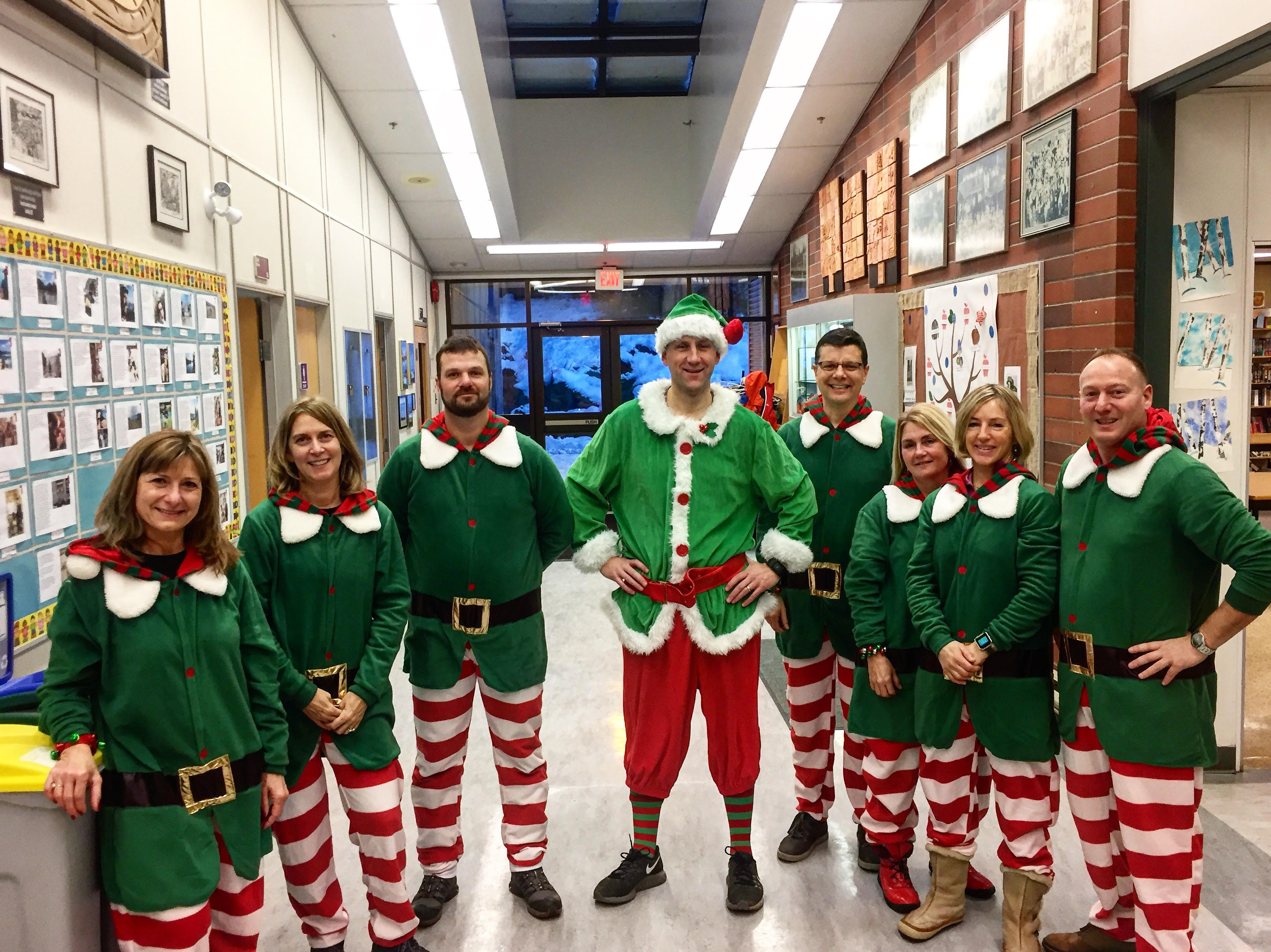
Our District Leadership Team has a tradition, now 10 years strong, the week before the holidays – Our “Great Cookie Delivery” or “Cookiepalooza”. It is our attempt at a personal way to express gratitude and build and live the culture we are so proud of in the school district. And it is a lot of fun!
I love the size of the school district we work in – about 7500 students, just over 1000 staff and a geography that lets you get around to all the schools in a day.
So, that is what we do. We load up our cars at 6 AM with cookies, with the goal of delivering to every staff member by the end of the day. We do most (probably 80-90%) in person and the rest are left in staff rooms.
And of course, we do it in costumes. As someone who dislikes Halloween for the costumes, for me this is probably the most difficult part.
But traditions are fun – and here is a look at our holiday tradition over the last decade:
This year – we wished everyone a Merry Swift-Mas.
In 2022, we were a team of holiday bakers.
In 2021, the lumberjacks were delivering cookies across the district.
In 2020, it was a COVID-era Santa-hat wearing Stormtrooper delivery.
In 2019, there were the not quite 12 drummers drumming.
In 2018, it was gingerbread people delivering the gingerbread.
In 2017, it was a Hawaiian holiday themed cookie delivery.
In 2016, the elves were left to delivery cookies across the district.
In 2015, we were wearing our Christmas jammies to delivery the cookies.
In 2014, we were all about the ugly Christmas sweaters.
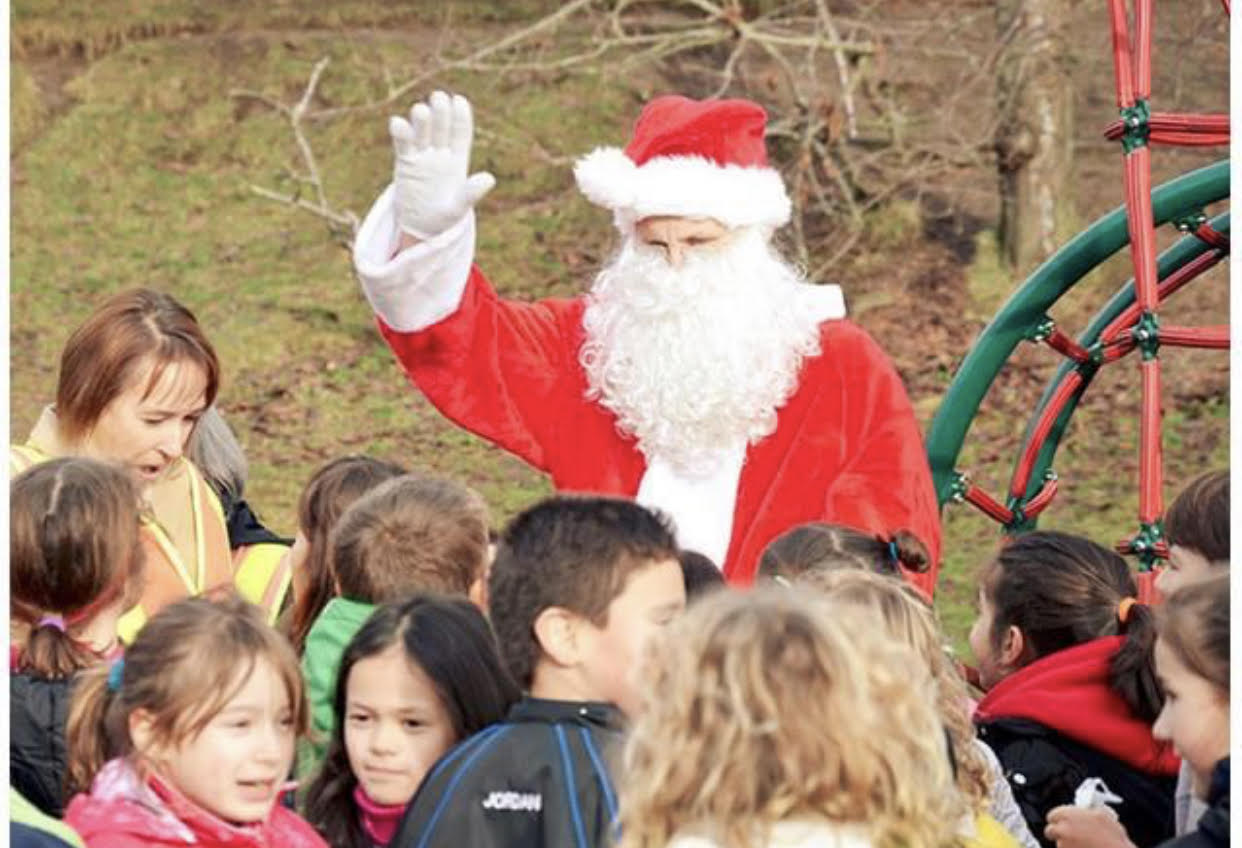
In 2013, it started with Santa and his helpers delivering the cookies.
Our team changes. Time moves on. But traditions keep us connected.
Hopefully with colleagues at work, or with friends and family you too have some wonderful holiday traditions.
Wishing everyone a wonderful break!
I will have one more post – my “Top 3” that will come out before the end of the year.
If you have a narrative you want to tell about education, locally or globally, PISA results can probably help confirm it. And for the most part, we do like bad news, so if you like to describe what is happening in education as “concerning” or “worrisome” or gravitate to ideas like “declining” or “falling” there was probably something for you in the latest wave of PISA results. Of course, if you want to see Canada, and more specifically British Columbia, as one of the world’s highest performing jurisdictions this evidence is also present.
First, let’s talk about what PISA results are. For those in education, they are a bit like the Education Olympics. They are a tool for comparing jurisdictions around the world. PISA is the OECD’s Programme for International Student Assessment, that measure 15-year-olds’ ability to use their reading, mathematics and science knowledge and skills. If you remember 10-15 years ago when everyone was going to Finland to learn what they were doing in education, this attention started from very strong PISA results.
And, like the Olympics, they are controversial. Criticisms include concerns about the narrow focus on certain skills, potential cultural biases, and the complex nature of education systems, which may not be fully captured by standardized assessments. My doctoral advisor, Yong Zaho is one the loudest critics. He wrote, “PISA is a masterful magician. It has successfully created an illusion of education quality and marketed it to the world.”
It does seem as though PISA results have got less attention this year than in previous waves – maybe that is a statement on fewer journalists covering education, or other global events dominating the news, or maybe the criticisms have some shying away from covering the results.
I have written here several times around the results.
In 2009 – Our World Cup (on reflection, I was much more excited about them than I am today)
In 2013 – Some PISA Thinking (which looked at BC’s results of that time)
I do think they have value – because at a time when it is important to have conversations around learning topics like numeracy and literacy there is little media attention around them. PISA brings these discussions to the provincial, national and even global levels. And while most are looking to tell a story about how we are just not as good as we used to be – so it must be the kids or the teachers, beyond this simplistic silliness there are good conversations worth having. And beyond the front page “Who is winning” comparisons, the survey breaks out data on topics that many are curious about, like the various impacts of COVID on learning, and the impact that home language or gender can have on results in jurisdictions. Some of the conversations that PISA can open up include:
The need for quality discussions around the use of data – at schools, in the community and with politicians
Areas of strength and weaknesses in schools and districts. When PISA says X about science in your country, what do we know about science at our school or district – do PISA results surprise us? Do they confirm what we know?
What do PISA and our local information tell us about equity? As you get into PISA there is a lot of information like the gap between the highest and lowest performing students – the smaller the gap, likely the more equitable, at least on this measure.
Education as a global topic. The assessing of students around the world is a reminder that our students are part of a global community – they will be competing in the workplace not just with those in their school or neigbourhood but much further afield.
A discussion about what matters. So, PISA says something about reading, math and science – what else do we value in our system and what other evidence can we use to better understand how we are doing?
What can we learn from others? Are there particular jurisdictions having success that stand out? (I would like to know what Utah is doing with math instruction as they outperform Finland in PISA). Like the Finland impact of the early part of the century, there may be something we can learn. Even within Canada, this can be useful. We need to see places like Alberta and Quebec as our partners not our competitors in BC.
As with any test results, PISA results are quickly politicized – so everyone spins the results. Often current governments will say the results prove everything is going well, those looking to be the next government will use the same data to say the opposite.
It was in my last post I wrote about the power of networking in British Columbia and how education is not just a competition. I see that PISA does open some of the wrong conversations around this battle between jurisdictions, but I do also think that any attention can be good attention – so let’s take this energy and focus and have real conversations about equity and excellence with numeracy, reading and science – not just for a single jurisdiction but for all learners everywhere.
When you are part of a culture that values collective success, you don’t often notice. It takes others pointing it out to you.
I was recently on a call with several Vancouver area superintendents planning an event for the new year. As we got to finalizing the plans, one of the superintendents said, “We need to think about how this will impact those in other areas of the province, and how they could also be involved,” The facilitator of the call was so surprised. He said that he does lots of these kind of events and planning and only people in BC talk like that – it was meant as a compliment.
Thinking of another example, there was a recent event with 170 high school principals across more than a dozen local school districts sharing ways they were implementing new initiatives and learning from each other. The principals came for the networking with both the belief they had something to learn and something to share.
I have recently spent some time in other jurisdictions in Canada and the United States, and there was definitely a more secretive and non-sharing culture. The ideas of networking seem far less important than winning. A vendor at one of these events, who felt they had a top end reading product promised school districts if they used it he would not sell it to surrounding districts so they could out perform them – it was a selling point that they could have something better than those around them.
Good learning and education is not like pie. If West Vancouver gets a nice big piece, it doesn’t mean all our neighbours get smaller pieces of pie. And too often it is lost on some that if one student’s success, one school’s success or one district’s success is at the expense of others, it is not really a success. Rather if we can create a community where we learn from each other’s success we are really onto something.
One value I really appreciate in BC education is that this collective success seems built in. Those in one district don’t want to gain advantage at the expense of others. And within districts, the conversations over the impact on other learners and other schools is always taking place.
We can be competitive without taking away from others. It is a careful balance but one that is always forefront for so many of us.
















 cultureofyes.ca